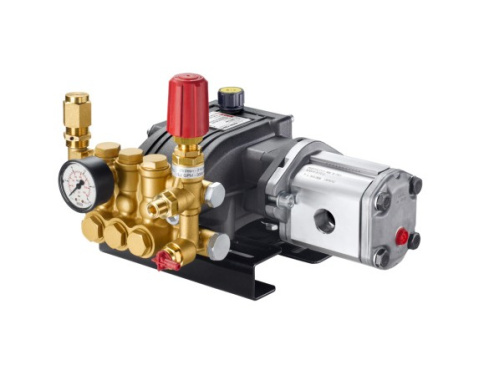
Common problems with piston pumps: causes and possible solutions
High-pressure piston pumps are rugged, reliable products, but like any mechanical component subjected to heavy-duty work, they can develop operating faults. Recognizing the symptoms and quickly pinpointing the cause is the best way to act in time, avoid more serious damage, and extend the life of the system. In this article we review the most common problems with piston pumps for water, from lack of pressure to vibration, from worn seals to water in the oil, explaining for each one the most frequent causes and the corresponding remedies. This information is based on Hawk's use and maintenance manual and on the "Troubleshooting and remedies" diagnostic table. One important note: repair work must always be entrusted to qualified, authorized personnel and, if in doubt or if a problem remains unresolved, it is advisable to contact the Manufacturer.
Why piston pumps can develop problems
Hawk pumps are positive-displacement pumps: the pumping action is produced by a series of pistons connected via connecting rods to the eccentric shaft, which slide in the head where the suction and delivery valves allow water to pass in one direction only. They are designed to pump clean water, fresh or mixed at low percentages with common detergents, up to a temperature of 65°C (with some high-temperature series reaching 85°C).
Most problems arise when operating conditions deviate from these premises: air or insufficient water on the suction side, the presence of abrasive particles, water temperature that is too high, neglected oil maintenance, or incorrect pump-motor coupling. The components most affected by these conditions are seals, valves, pistons, and bearings. Let's take a detailed look at the most frequent symptoms.
The pump does not build pressure or does not reach the desired pressure
This is the most frequently reported problem. If the pump turns but produces neither noise nor pressure, in almost all cases it is not being supplied and is running dry. You need to verify that there is actually water on the suction side, that the delivery outlet (the gun or the lance) is open to aid the supply, and that the valves are not stuck. Dry running must always be avoided, because it causes rapid wear of the seals.
When instead the pump turns but is too noisy and does not reach the desired pressure, there are several possible causes. An oversized or worn nozzle does not provide the necessary resistance and must be replaced. An insufficient water supply is remedied by cleaning or replacing the filter with one of adequate size, eliminating any air intake, and checking the diameter of the suction hose, replacing it with a larger one if necessary. Other frequent causes are the pressure regulating valve not being correctly set or being inefficient, the presence of foreign bodies in the valves, worn piston seals, or a rotation speed that is too low, which should be verified by checking the motor and transmission.
Excessive noise, pulsation, and vibration
If the pump builds pressure but with heavy pulsation and vibration, suspicion falls first of all on the valves: foreign bodies inside them should be removed by cleaning, while worn valves must be replaced. An inlet water temperature that is too high and worn piston seals can also generate this irregular behavior.
More constant excessive noise, on the other hand, is often attributable to worn bearings that need replacing, to a water temperature that is too high, or to coupling problems between the pump and the motor. In this last case it is a good idea to check the condition of the keys, the flexible coupling, or the pulley, bearing in mind that the pump shaft and the motor shaft must be perfectly aligned.
Premature wear of seals
A short service life of the piston seal is almost always a sign of an unfavorable working condition. The most typical cause is cavitation or the presence of air in the system, due to an undersized suction hose: the solution is to check its condition and diameter, increasing it if necessary. Other causes are damage to the ceramic piston (which must be replaced), excessive water pressure or temperature, prolonged operation in by-pass, and the presence of abrasive solids in the water. For these last two aspects, two practical rules apply: limit by-pass operation to no more than 5 minutes and install an adequate filter on the suction side.
Leaks and water in the oil
The presence of water in the oil deserves special attention. If the oil looks milky (emulsified) but its level in the crankcase does not rise, it is simply condensation and it is enough to change the oil more frequently. If instead the level rises, the cause is wear of the piston-rod oil seal or of the seals: in these cases the oil seal or the seal pack must be replaced. It will also be necessary to check for external environmental causes, for example a malfunction of a nearby valve leaking water, or washing of the machinery with water that then infiltrates the pump.
A water leak between the crankcase and the head indicates a worn seal pack, a worn piston, or a deteriorated seal on the piston stop screw, all components that must be replaced. An oil leak between the crankcase and the head, on the other hand, is typically caused by a worn piston-rod oil seal. In general, many minor leaks from the fittings are eliminated by correct tightening or by restoring the sealing, especially on the suction lines.
Summary table: problems, causes, and remedies
The following table summarizes the main faults of piston pumps for water, the most frequent cause, and the corrective action, for quick reference.
|
Problem |
Most frequent cause |
Remedy |
|
Turns with neither noise nor pressure |
Pump not supplied, running dry |
Check for water on the suction side, an open delivery outlet, and free valves |
|
Noisy and insufficient pressure |
Worn nozzle or insufficient water supply |
Replace the nozzle, clean/replace the filter, eliminate air, increase the suction hose diameter |
|
Irregular pressure |
Regulating valve not set, worn or clogged valves |
Set the valve, clean or replace the valves |
|
Pulsation and vibration |
Foreign bodies or worn valves, water too hot |
Clean or replace the valves, reduce the water temperature |
|
Excessive noise |
Worn bearings or pump-motor coupling |
Replace the bearings, check keys, coupling, and pulley |
|
Short-lived piston seals |
Cavitation, air in the system, or abrasive solids |
Increase the suction hose diameter, install a filter, limit by-pass to 5 min |
|
Water in the oil |
Worn oil seal or condensation |
Replace the oil seal or change the oil more often |
|
Water leak between head and crankcase |
Worn seal pack or piston |
Replace seals and piston |
|
Short-lived bearings |
Incorrect coupling or oil not changed |
Check the coupling, respect the oil change intervals |
How to prevent the most common problems
Most of the faults described can be prevented with a few good installation and maintenance practices indicated by Hawk. On the installation side, the suction line must have a diameter no smaller than that of the suction port and the fewest possible restrictions (elbows, T-fittings, reducers); every joint must be carefully sealed to prevent air intake. It is also essential to fit a filter on the suction side, oversized relative to the flow rate, and to install a regulating valve, a safety valve, and a pressure gauge on the delivery side.
On the maintenance side, the measures that make the difference are few but decisive:
- Perform the first oil change within the first 50 hours and subsequent changes every 500 hours or once a year (more often in case of heavy-duty use), using SAE 10/40W oil;
- Clean the filter periodically and regularly check the oil level, leaks, and the condition of the flexible hoses;
- Avoid dry running and limit periods in by-pass, never operating beyond the pressure and speed values indicated on the nameplate.
When a component turns out to be worn, it is important to replace it with original spare parts: the use of non-original parts, in addition to compromising performance, voids the warranty.
What are the most common pump problems and how to solve them
The most common problems with piston pumps for water fall into a few families: lack of or drop in pressure, almost always caused by failure to prime, a worn nozzle, a dirty filter, or valves needing cleaning or setting; noise, pulsation, and vibration, related to valves, water that is too hot, or a misaligned coupling; premature seal wear as a consequence of cavitation, abrasives in the water, or neglected oil maintenance; and leaks or water in the oil, due to deteriorated seals and gaskets. In every case the logic is the same: identify the symptom, trace it back to the most likely cause, and act on the affected component, entrusting repairs to qualified personnel. Correct installation, a clean water supply, and regular maintenance remain the most effective way to prevent most of these faults.
Share this Article